Road and transport
Tasmanian motor accident claims
MAIB material says an application for scheduled benefits ordinarily should be made within 12 months. Keep police, vehicle, treatment and travel information.
MAIB — claims procedures ↗City · Tasmania
Personal injury lawyers in Hobart can assist with motor, workplace, public liability and medical negligence claims. Hobart injury enquiries can involve motor accident, workers compensation, public liability and medical negligence pathways. Identify the correct Tasmania process and preserve local evidence before comparing Injury Law Firms.
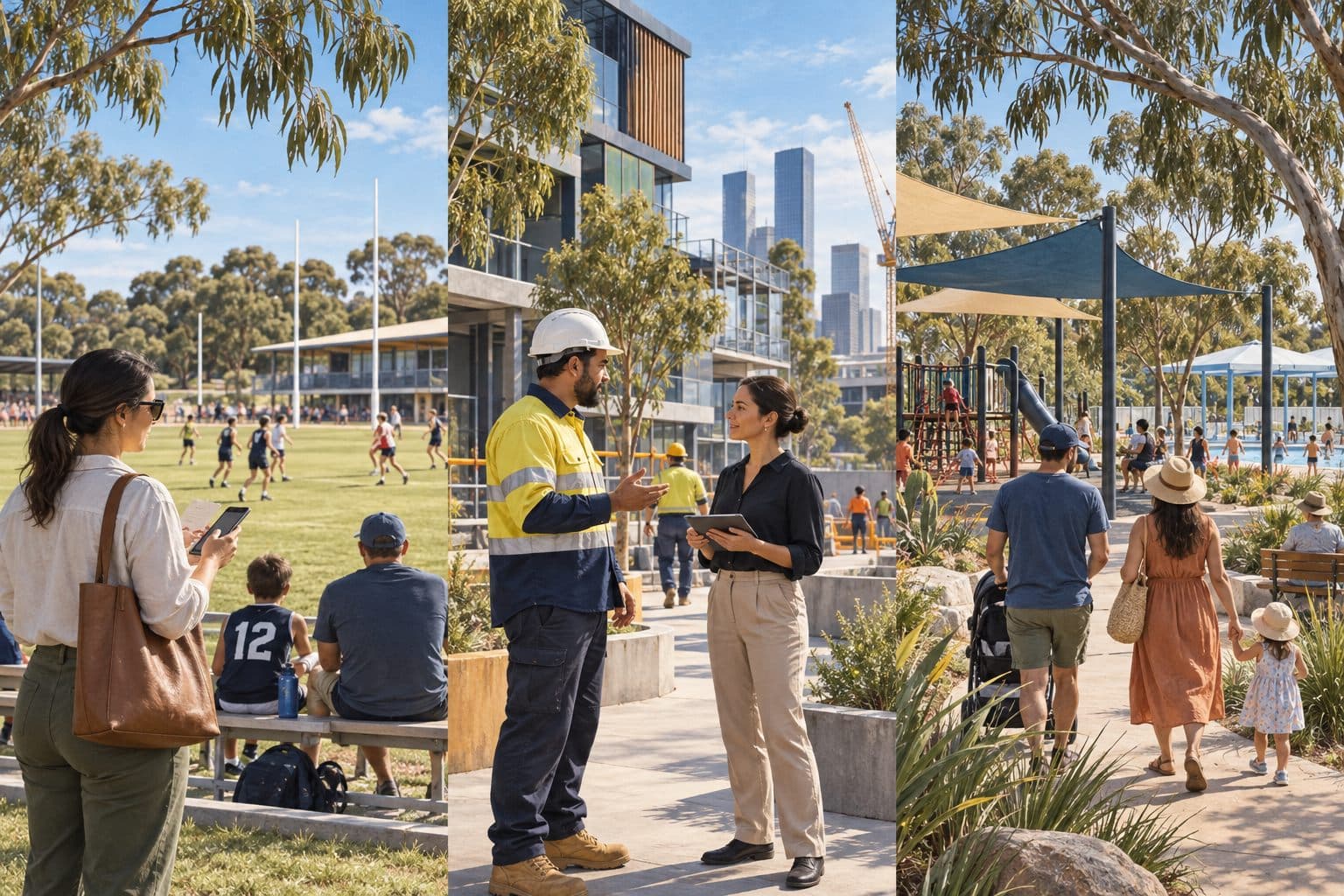
Local evidence and claim pathways
Hobart settings include Salamanca, supermarkets, schools, playgrounds and council facilities. In a hypothetical incident, the precise controller, report, witnesses, photographs and time-sensitive CCTV may matter. Naming a place provides context only and does not allege fault.
Travel around the Brooker and Tasman highways, Metro buses and Hobart Airport, work in tourism, construction, public administration, health and maritime work, and treatment through Royal Hobart Hospital can create separate records. The hospital is a treatment reference, not an implied defendant.
AI-generated editorial illustration. It does not depict a real firm, client, injury or proceeding.Before comparing firms
Health and safety come first. Preserve reliable information without delaying treatment.
Road and transport
MAIB material says an application for scheduled benefits ordinarily should be made within 12 months. Keep police, vehicle, treatment and travel information.
MAIB — claims procedures ↗Injured at work
WorkSafe Tasmania says a worker usually must make a claim within six months, subject to the legislation and exceptions.
WorkSafe Tasmania — making a claim ↗General information only — not legal advice. Search Solicitors is a directory and information resource, not a law firm. Laws and procedures vary across Australia and may change. Seek advice from an appropriately qualified Australian legal practitioner about your own circumstances. A firm profile is not an endorsement or a guarantee of qualifications, availability or outcomes.
These Injury Law Firms match the current location or service data. They are research starting points, not rankings, quality endorsements or a complete set of firms. Confirm current services, credentials and office details directly.
Launceston, TAS · Criminal Law
Services and office details →Hobart, TAS · Personal Injury
Services and office details →Hobart, TAS · Partner Visas
Services and office details →Launceston, TAS · Partner Visas
Services and office details →Devonport, TAS · Partner Visas
Services and office details →Burnie, TAS · Partner Visas
Services and office details →Hobart, TAS · Wills Estates
Services and office details →Hobart, TAS · Professional Negligence
Services and office details →Personal injury areas of law
Choose an injury claim type to find matching law firms and read the relevant local information.
Personal injury law can involve statutory benefits, insurer processes and civil claims after physical or psychological harm.
02Motor injury claims use state or territory schemes rather than one national CTP process.
03Workers compensation is administered through different Australian schemes, forms, insurers and review processes.
04Public liability work examines control of premises or activities, foreseeable risk, reasonable precautions, causation and loss.
05Medical negligence assessment separates an adverse outcome from a legally actionable breach that caused additional harm.
06Professional negligence concerns whether professional work fell below the required standard and caused recoverable loss.
07Class actions are representative proceedings with common issues, court supervision and funding or cost arrangements that need careful explanation.
08TPD and insurance claims through super depend on the policy wording, employment history, medical evidence and trustee or insurer decision process.
09Sport and recreation injury work considers accepted risk, rules, supervision, facilities, equipment, waivers and the conduct that caused the injury.
Injury settings
Hypothetical research prompts, not findings about liability.
Hypothetical example: a passenger is injured while travelling from Hobart's nearest relevant airport, or a cyclist is hurt near the Brooker and Tasman highways, Metro buses and Hobart Airport.
Evidence: Vehicle and operator details, police information, dash-camera or CCTV footage, booking records, medical evidence and proof of earnings may matter.
Questions: A lawyer would identify the correct motor scheme and insurer, consider fault and work travel, and check the earliest notification and claim dates.
Related injury guide →Hypothetical example: a customer falls at Salamanca, supermarkets, schools, playgrounds and council facilities. An injury at a business does not by itself prove negligence.
Evidence: Photographs, footwear, receipts, an incident report, witnesses, CCTV preservation requests and cleaning or inspection records may be relevant.
Questions: Who controlled the area, how long did the condition exist, what inspection system operated and did the condition cause the injury?
Related injury guide →Hypothetical example: a person is injured at Salamanca, supermarkets, schools, playgrounds and council facilities. Different entities may control adjoining land and infrastructure.
Evidence: Exact map location, wide and close photographs, maintenance reports, weather, witnesses, signage and council correspondence may assist.
Questions: The controller, knowledge of the risk, reasonable precautions, statutory protections and causation all need investigation.
Related injury guide →Hypothetical example: a student is injured during supervised play, practical learning or organised sport. The outcome alone does not establish a breach.
Evidence: Activity plans, consent material, risk assessments, supervision arrangements, incident reports, witnesses and clinical records may matter.
Questions: Was the institution public or private, who organised the activity, what risk was foreseeable and are government-claim procedures relevant?
Related injury guide →Hypothetical example: a child, pedestrian or delivery worker is bitten in a park or at residential premises.
Evidence: Owner and animal details, a council report, photographs, witnesses, medical treatment and employment records may assist.
Questions: Ownership, control, location, the circumstances of the interaction and any workers compensation overlap require assessment.
Related injury guide →Hypothetical example: a worker is injured in tourism, construction, public administration, health and maritime work.
Evidence: The injury report, capacity certificate, site or induction records, safety documents, photographs, witnesses and wage records may matter.
Questions: Worker status, the employer and insurer, statutory benefits, rehabilitation, third parties and any common-law threshold are separate questions.
Related injury guide →Public liability and medical negligence
A Tasmania public liability claim is not proved by an injury alone. Control, foreseeable risk, reasonable precautions, causation and loss require evidence. Councils, public schools and government bodies may have additional statutory protections or procedures.
For medical care, an unexpected outcome is not by itself proof of negligence. The complete clinical record and independent expert opinion may be needed to assess breach, causation and loss.
Keep the exact location and time, photographs, witness contacts, incident or police references, medical records, receipts and evidence of time away from work.
No. It records an event. Control, breach, causation, statutory rules and the evidence still need assessment.
No. The activity, supervision, foreseeable risk, causation and whether the school is public or private must be considered.
Medical evidence, photographs, owner and animal details, witnesses and any council or police report may assist. Keep work records too if it happened during employment.
Often, but confirm Tasmania injury experience, who will do the work, remote options, local investigation, attendance needs and any travel costs.
It is a costs agreement, not necessarily a free service. Ask how a win is defined, how disbursements and any uplift are treated, and what happens if the matter ends early.
No. Obtain care and preserve records, but seek advice promptly about early notice or claim steps while further evidence is collected.
No. Motor, workplace, public liability, medical negligence, child and government-body matters can have different notices, claim dates and court limits.